
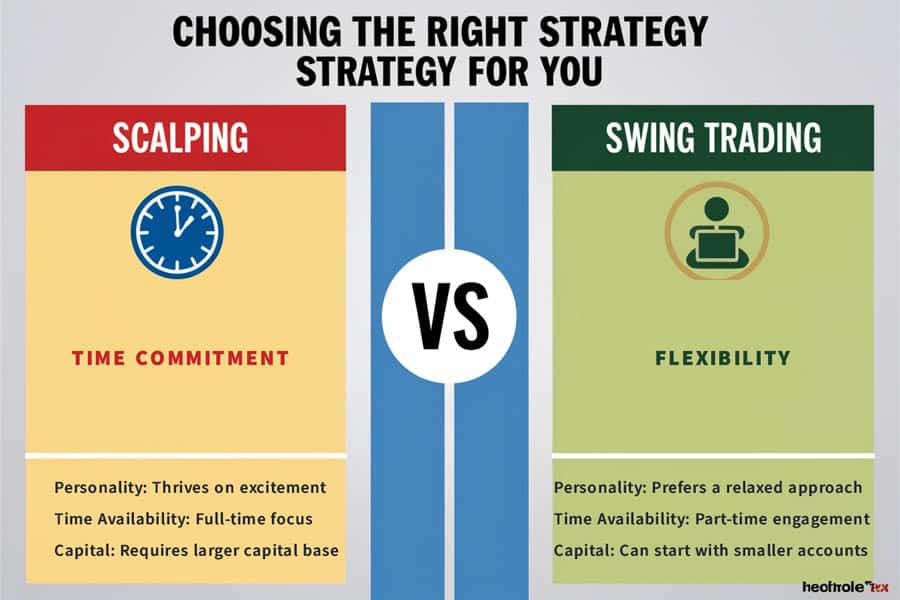
Ever tried juggling two different rhythms in the stock market, like dancing a slow waltz versus a frantic tango? That’s kinda what swing trading and scalping feel like to me—two sides of the same trading coin, but boy, do they pull you in different directions. I’m no wizard, just a trader who’s been around the block, sipping coffee while watching charts flicker, and I’ve seen how these approaches can make or break your day. Let’s chat about the differences between swing and scalping in a laid-back way, without all the stiff jargon, so you can figure out which vibe suits your style.
At its core, swing trading grabs onto market swings over days or weeks to catch bigger price movements, while scalping darts in and out for quick, tiny profits in minutes. The key differences? Swing demands patience and a broader view, eyeing trends and patterns for larger gains, whereas scalping thrives on speed, nabbing small wins from volatility multiple times a day. If you’re asking which one’s easier for most folks, swing might feel less intense, letting you step away from the screen without missing the beat.
Picture this: I once dove into swing trading after a buddy shared his story of turning a modest investment into a nice chunk by holding onto stocks through a week’s worth of ups and downs. It was like waiting for the perfect wave to surf, not rushing every ripple. On the flip side, scalping? That’s more like street hockey—fast-paced, reactive, and if you’re not quick on your feet, you might trip over your own skates. Both are part of the trading guides world, but they cater to different personalities. If you’re the type who gets a thrill from quick wins, scalping could be your jam; if you prefer plotting your course like a weekend road trip, swing trading might call your name.
Crypto Volatility Handling TacticsThe Laid-Back Ride of Swing Trading
Swing trading isn’t about staring at screens all day—it’s more like setting a trap for those medium-term market swings. You might hold a position for a few days to a couple of weeks, riding the momentum from support to resistance levels. Think of it as casting a net in a river; you wait for the fish to swim in, rather than chasing every little splash. From my experience, it’s great for beginners because it gives you breathing room to learn without the pressure of split-second decisions. Keywords like “swing trading strategies” often pop up in guides because they emphasize technical analysis, like moving averages or candlestick patterns, to predict those swings.
What’s appealing is the potential for bigger rewards. You’re not sweating the small stuff; instead, you’re aiming for 5-20% gains per trade. But hey, it’s not all sunshine—markets can swing the other way, turning your plan into a bumpy ride. In trading guides, folks often highlight how swing trading aligns with part-time traders, those with day jobs who can’t monitor every tick. It’s a strategy that builds on patience, almost like growing a garden; you plant the seeds and check back later.
The High-Speed Thrill of Scalping
Now, scalping? That’s the espresso shot of trading—short, intense bursts that keep you wired. You’re in and out of trades within minutes or hours, snatching up fractions of a percent from price fluctuations. It’s less about the big picture and more about exploiting every tiny market inefficiency, like picking pockets in a crowded bazaar. In trading guides, scalping is described as a high-frequency game, perfect for those with a setup that includes multiple monitors and lightning-fast execution.
I remember trying scalping during a volatile session; it felt exhilarating, like playing a video game where every level is a quick win or loss. But it’s not for the faint-hearted—high trading volume and liquidity are must-haves, and you’ll rack up more transaction costs with all those entries and exits. Guides often warn that scalpers need iron discipline to avoid emotional pitfalls, as the rapid pace can lead to overtrading. If swing is a leisurely bike ride, scalping is a motorcycle dash through traffic.
Stock Selection Criteria for InvestorsSpotting the Core Differences Side by Side
Let’s break this down without getting too textbook-y. The main differences between swing and scalping boil down to time frames, risk levels, and the skills they demand. Swing traders play the long game, holding positions overnight and even through weekends, which means they’re exposed to overnight risks like news events. Scalpers, on the other hand, close out before the market shuts, minimizing that exposure but maximizing the need for constant vigilance.
| Aspect | Swing Trading | Scalping |
|---|---|---|
| Time Frame | Days to weeks | Minutes to hours |
| Risk Tolerance | Moderate; focuses on trends | High; relies on volatility |
| Potential Gains | Larger per trade | Smaller, more frequent |
| Skills Needed | Technical analysis, patience | Quick reflexes, discipline |
This table sums it up nicely—it’s like comparing a novel to a short story in the world of trading guides. Both have their merits, but swing vs scalping differences really shine when you think about your daily life. If you’ve got a full-time gig, swing might fit better, whereas scalping could appeal to the night owls or full-time traders.
When to Pick One Over the Other
Deciding between these approaches is personal, almost like choosing your favorite music genre. If you’re just starting out in trading guides, swing trading might be less overwhelming, as it allows time to reflect and learn from mistakes without the constant pressure. Scalping, though, can build a habit of quick decision-making, which is invaluable in volatile markets. I’ve seen traders mix both, like a playlist, to balance their portfolio.
One thing guides often overlook is the emotional toll. Swing trading lets you step back and breathe, reducing stress from market noise, while scalping keeps your adrenaline pumping, which can be addictive or exhausting. Consider your capital too—scalping might need more to cover those frequent trades, whereas swing can start smaller.
Forex Currency Pair CorrelationsWrapping Up with a Thought
As we wrap this chat, imagine peering into your trading mirror: are you a patient observer or a swift operator? Whichever path you choose in the trading guides realm, it’s about finding what clicks with your rhythm. Maybe dive into a demo account and test the waters—your next trade could be the one that swings things your way.
Quick FAQ
What’s better for beginners: swing or scalping? For newcomers, swing trading is often easier since it doesn’t demand constant monitoring. You can learn the ropes without the high stress, focusing on broader trends rather than split-second moves.
How much time do I need for each? Swing trading might only require a few hours a week for analysis, making it ideal for busy folks, while scalping needs near-full attention during trading hours to catch those quick opportunities.
Building Wealth through Trading DiversificationCan I combine both strategies? Absolutely, many traders do! Use swing for your core positions and scalping for quick profits on the sidelines, but always manage your risk to avoid overexposure.