
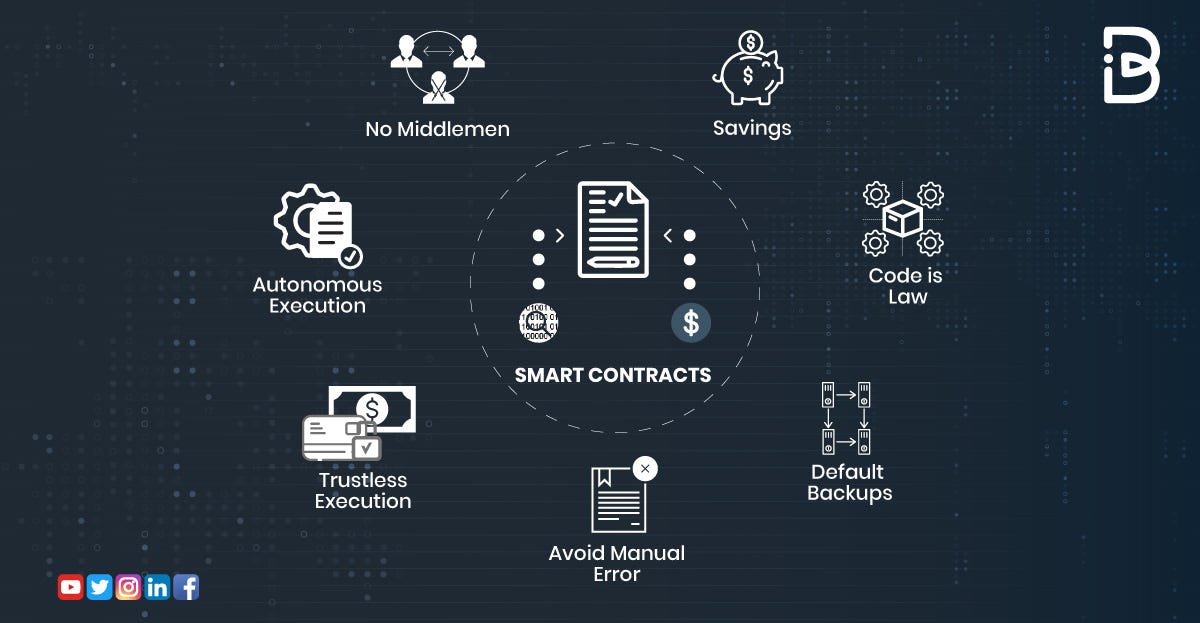
Ever thought about how life would be if agreements just… happened on their own, like that friend who always remembers to split the dinner bill without you having to nag? That’s the magic vibe of smart contracts in the blockchain universe—self-enforcing pacts that cut out the middlemen and keep things honest. We’re diving deep into this today, exploring how these digital wonders are reshaping deals, from crypto trades to everyday smart tech. If you’re curious about blockchain guides that feel less like a textbook and more like a chat over coffee, stick around; we’ll unpack it all in a relaxed flow.
Smart contracts are basically lines of code on a blockchain that automatically execute, control, or document legally relevant events according to predefined rules. Think of them as digital vending machines: you put in the right input, and out comes exactly what was promised, without delays or disputes. In essence, they answer the core question of what smart contracts really are by serving as unbreakable agreements etched into the blockchain’s ledger, ensuring transparency and trust in a decentralized world.
The Basics: Unwrapping Smart Contracts Like a Birthday Gift
Let’s ease into this. Imagine you’re planning a trip and booking a hotel through an app that instantly confirms your room once payment hits—no emails, no calls, just done. That’s a simplified take on smart contracts, pioneered by computer scientist Nick Szabo back in the ’90s. These aren’t “smart” in the AI sense; they’re clever scripts on blockchains like Ethereum that trigger actions when conditions are met. For blockchain guides enthusiasts, understanding this means grasping how they eliminate intermediaries, reducing costs and errors in processes from supply chain verifications to automated insurance payouts.
Dive a bit deeper, and you’ll see smart contracts thrive on platforms where data is immutable. Words like “decentralized applications” or “dApps” pop up, referring to the ecosystems they power. It’s not just tech jargon; it’s about creating trust in a world where hacks and frauds lurk. A fun twist: remember that viral meme of a cat ordering pizza online? That’s loosely how smart contracts work—once the “if” condition (like payment) is fulfilled, the “then” action (delivering the goods) fires up automatically.
Top Blockchain Wallets ReviewedHow They Tick: The Inner Workings of Blockchain Magic
Under the hood, smart contracts run on blockchain networks, executing code via consensus mechanisms that keep everything secure and tamper-proof. It’s like a global spreadsheet that everyone can see but no one can alter without consensus. For instance, on Ethereum, you write these in languages like Solidity, deploying them to handle transactions autonomously. If you’re into blockchain guides, picture this as a recipe: mix in cryptographic keys, add some peer-to-peer verification, and bake until you get a foolproof agreement.
One cool analogy? Think of smart contracts as automated traffic lights—they change based on real-time data, not a human flipping switches. This means no more waiting for banks or lawyers; everything from token swaps in DeFi to NFT royalties gets handled in code. But hey, it’s not all smooth—bugs in the script can lead to mishaps, like the infamous DAO hack that lost millions. Still, with advancements, they’re becoming more robust, offering a peek into how blockchain is evolving everyday interactions.
Real-World Flavors: From Crypto to Coffee Shops
Shifting gears, let’s sprinkle in some everyday examples to keep things lively. In the art world, smart contracts ensure artists get paid every time their digital piece is resold, cutting out galleries and fees. Or in supply chains, they track goods from farm to table, verifying authenticity with each step. These aren’t just tech demos; they’re practical tools reshaping industries, as seen in how companies like IBM use them for secure international trades.
| Feature | Traditional Contracts | Smart Contracts |
|---|---|---|
| Execution | Relies on human enforcement | Automated via code |
| Transparency | Limited to parties involved | Fully visible on blockchain |
| Cost | High due to intermediaries | Lower, with faster processing |
| Risks | Fraud, disputes | Code errors, but immutable once set |
Pros and Cons: Weighing the Blockchain Scales
On the upside, smart contracts bring efficiency and security, slashing paperwork and boosting speed in a digital age. They’re a game-changer for blockchain guides seekers, offering reduced fraud through encryption and real-time auditing. But let’s not sugarcoat it—downsides include their inflexibility; once deployed, you can’t tweak them easily, which might backfire in complex legal scenarios. Plus, accessibility is an issue; not everyone has the coding chops to build them, though user-friendly platforms are emerging.
Strategies for Enhancing Blockchain SecurityFrom an emotional angle, it’s thrilling to see how these tools empower individuals in developing regions, enabling microloans without banks. Yet, as with any tech, there’s a cultural nod to be made—remember how blockchain memes exploded during the NFT boom? They highlight the quirky, community-driven side of smart contracts, blending innovation with pop culture in unexpected ways.
Looking Ahead: The Evolving Landscape
As we wrap up this journey, imagine smart contracts as the seeds of a tech forest, growing into everything from autonomous vehicles to personalized health records. They’re not just a fad; they’re the backbone of Web3, promising a future where trust is coded, not assumed. So, what’s your take—ready to experiment with one yourself, or still on the fence about diving into blockchain’s deeper waters?
Quick FAQ on Smart Contracts
Q: What exactly makes a smart contract “smart”? A: It’s the automation and self-execution based on code, not intelligence. They use if-then logic to enforce terms on a blockchain, making deals faster and more reliable without human intervention.
Q: Are smart contracts only for cryptocurrencies? A: Not at all! While popular in crypto like Ethereum, they’re also used in real estate, voting systems, and even supply chain management for broader blockchain applications.
Avoiding Common Crypto Mining ErrorsQ: Can smart contracts be hacked? A: Theoretically yes, if there’s a vulnerability in the code, but blockchains add layers of security. Always audit and test them to minimize risks in your projects.