
Meta Description
Learn how to earn passive income with cryptocurrency without active trading. Compare staking, stablecoin rewards, lending, yield farming, masternodes, liquidity pools, and crypto income risks.
How to Earn Passive Income with Cryptocurrency Without Trading
Earning passive income with cryptocurrency is one of the most popular goals among long-term investors. Instead of buying and selling tokens every day, many crypto holders look for ways to generate rewards from assets they already own.
The idea is simple: put your crypto to work.
However, crypto passive income is not risk-free. Rewards can change, platforms can fail, tokens can lose value, and tax rules may apply. The best approach is to understand each strategy before committing funds.
Best Banks That Support Cryptocurrency Transactions in 2026This guide explains the most common ways to earn passive income with cryptocurrency without active trading, including staking, stablecoin rewards, lending, liquidity pools, yield farming, masternodes, and crypto savings products.
Disclaimer: This article is for informational purposes only and does not provide financial, investment, tax, or legal advice. Cryptocurrency involves risk, including the possible loss of principal.
What Is Crypto Passive Income?
Crypto passive income refers to earning rewards from digital assets without actively trading them.
Instead of trying to profit from short-term price movements, investors may earn income through:
Crypto Tax Mistakes That Could Cost Investors Thousands of Dollars- Staking
- Lending
- Stablecoin rewards
- Liquidity pools
- Yield farming
- Masternodes
- Crypto savings accounts
- Tokenized real-world assets
- Affiliate or referral programs
Some methods are relatively simple. Others are complex and carry significant risk.
The key is understanding how rewards are generated.
Can You Really Earn Passive Income with Crypto?
Yes, but the word “passive” can be misleading.
Crypto income often requires:
How to Buy Bitcoin Safely: Complete Beginner’s Guide- Research
- Risk management
- Platform selection
- Wallet security
- Tax tracking
- Monitoring reward rates
- Understanding smart contract risk
Unlike a traditional bank savings account, crypto income products may not be insured or guaranteed.
High yields usually come with high risk.
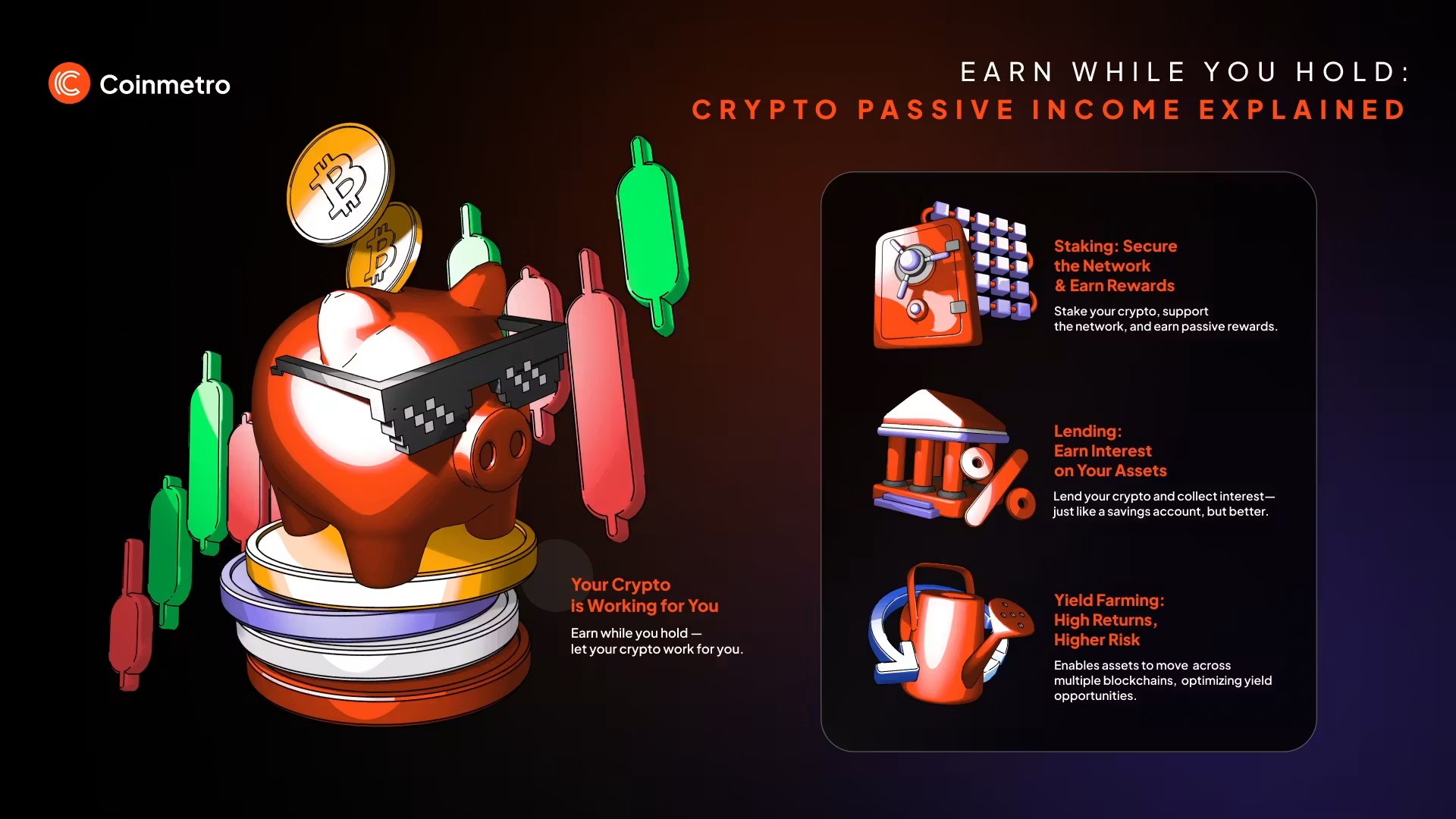
1. Crypto Staking
Staking is one of the most common ways to earn passive income with cryptocurrency.
It applies to proof-of-stake blockchains, where users lock or delegate tokens to help secure the network and validate transactions.
Best Crypto Wallets for Long-Term Investors in 2026In return, stakers may receive rewards.
Popular staking assets include:
- Ethereum
- Solana
- Cardano
- Polkadot
- Cosmos
- Avalanche
- Tezos
How Staking Works
When you stake crypto, your assets help support blockchain operations.
Depending on the network and platform, you may:
- Delegate tokens to a validator
- Use a centralized exchange
- Run your own validator
- Use liquid staking protocols
In exchange, you earn staking rewards.
Pros of Staking
- Simple compared to trading
- Available for many major cryptocurrencies
- Can support long-term holding
- Rewards may compound over time
- Often easier than DeFi yield farming
Cons of Staking
- Token price can fall
- Rewards are not guaranteed
- Some networks have lock-up periods
- Validator slashing may occur
- Platform fees may reduce returns
- Tax reporting may be required
Best For
Staking is best for long-term investors who already believe in a proof-of-stake asset and want to earn additional rewards while holding.
2. Liquid Staking
Liquid staking is a variation of staking.
Instead of locking tokens directly, investors receive a liquid staking token that represents their staked position.
For example, an investor may stake ETH and receive a liquid token that can be used in DeFi.
Why Investors Use Liquid Staking
Liquid staking can provide:
- Staking rewards
- Greater flexibility
- Access to DeFi opportunities
- Easier participation for smaller investors
Risks of Liquid Staking
Liquid staking adds extra layers of risk, including:
- Smart contract risk
- Peg risk
- Protocol risk
- Validator risk
- Liquidity risk
Liquid staking can be powerful, but beginners should understand the risks before using it.
Best For
Liquid staking is best for experienced crypto users who want staking rewards without fully giving up liquidity.
3. Stablecoin Rewards
Stablecoin rewards are popular among investors who want crypto income without direct exposure to volatile assets like Bitcoin or Ethereum.
Stablecoins are designed to track the value of a fiat currency, usually the U.S. dollar.
Popular stablecoins include:
- USDC
- USDT
- DAI
- PYUSD
Some platforms offer rewards for holding or lending stablecoins.
Pros of Stablecoin Rewards
- Lower price volatility than most cryptocurrencies
- Easier to understand for beginners
- Can provide predictable income
- Useful for investors waiting to buy crypto later
Cons of Stablecoin Rewards
- Stablecoins can lose their peg
- Platforms can fail
- Rewards can change quickly
- Regulatory rules may affect availability
- Counterparty risk can be significant
Best For
Stablecoin rewards are best for investors who want crypto-based yield while reducing exposure to token price volatility.
4. Crypto Lending
Crypto lending allows investors to lend their digital assets to borrowers through centralized platforms or decentralized protocols.
In return, lenders may earn interest.
How Crypto Lending Works
You deposit crypto into a lending platform.
The platform lends assets to borrowers, traders, or institutions.
You receive interest or yield.
Common Lending Assets
- Bitcoin
- Ethereum
- USDC
- USDT
- DAI
- Wrapped assets
Pros of Crypto Lending
- Can generate income on idle assets
- Stablecoins may offer attractive rates
- Some platforms are easy to use
- No active trading required
Cons of Crypto Lending
- Borrower default risk
- Platform insolvency risk
- Smart contract risk
- Withdrawal restrictions
- Regulatory risk
- No guaranteed returns
Best For
Crypto lending is best for investors who understand counterparty risk and are willing to accept platform risk in exchange for yield.
5. DeFi Lending Protocols
DeFi lending platforms allow users to lend crypto directly through smart contracts.
Instead of relying on a centralized company, lenders interact with decentralized protocols.
Examples of DeFi lending models include:
- Overcollateralized loans
- Variable interest rates
- Algorithmic supply and demand pricing
- Collateral liquidation systems
Pros of DeFi Lending
- No traditional intermediary
- Transparent on-chain activity
- Global access
- Flexible deposits and withdrawals
- Potentially competitive yields
Cons of DeFi Lending
- Smart contract exploits
- Liquidation risk
- Protocol governance risk
- Wallet security responsibility
- Complex user experience
Best For
DeFi lending is best for experienced users who understand wallets, gas fees, smart contracts, and protocol risks.
6. Liquidity Pools
Liquidity pools allow investors to provide pairs of crypto assets to decentralized exchanges.
In return, liquidity providers may earn a share of trading fees and sometimes additional token rewards.
Example
You provide ETH and USDC to a liquidity pool.
Traders use that pool to swap between ETH and USDC.
You earn a portion of the trading fees.
Pros of Liquidity Pools
- Can generate fee income
- Supports decentralized trading
- Potentially higher yields than simple staking
- Available across many DeFi ecosystems
Cons of Liquidity Pools
- Impermanent loss
- Smart contract risk
- Volatile returns
- Complex position management
- Token reward inflation
What Is Impermanent Loss?
Impermanent loss occurs when the price of assets in a liquidity pool changes compared with simply holding those assets.
In some cases, trading fees may not fully offset this loss.
Best For
Liquidity pools are best for experienced DeFi users who understand impermanent loss and smart contract risk.
7. Yield Farming
Yield farming involves moving crypto assets between DeFi protocols to earn the best possible rewards.
This may include:
- Lending
- Borrowing
- Staking
- Providing liquidity
- Earning governance tokens
Yield farming can produce high returns, but it is also one of the riskiest passive income strategies.
Pros of Yield Farming
- Potentially high rewards
- Many strategies available
- Works across multiple DeFi ecosystems
- Can combine several income sources
Cons of Yield Farming
- High complexity
- Smart contract risk
- Token price risk
- Rug pull risk
- Gas fees
- Reward rates can collapse quickly
Best For
Yield farming is best for advanced users, not complete beginners.
8. Masternodes
Some blockchain networks use masternodes to support network functions such as validation, governance, or transaction processing.
Operators may earn rewards for running a masternode.
Pros of Masternodes
- Potential recurring rewards
- Supports blockchain infrastructure
- May provide governance rights
Cons of Masternodes
- High minimum token requirement
- Technical setup
- Server maintenance
- Token price risk
- Project failure risk
Best For
Masternodes are best for technically skilled investors with strong confidence in a specific blockchain project.
9. Crypto Savings Accounts
Crypto savings accounts are offered by some centralized platforms.
Users deposit crypto or stablecoins and earn rewards.
These products are easy to use, but investors should be cautious.
The collapse of several crypto lending platforms in previous market cycles showed that high advertised yields can involve serious hidden risks.
Pros
- Easy for beginners
- Passive earning experience
- Often supports stablecoins
- Simple dashboard
Cons
- Platform insolvency risk
- Withdrawal freezes
- Lack of insurance
- Regulatory uncertainty
- Rate changes
Best For
Crypto savings accounts may appeal to beginners, but only after careful research into platform risk.
10. Crypto Affiliate and Referral Programs
Not all crypto passive income requires investing more capital.
Some exchanges, wallets, and crypto platforms offer referral rewards when users invite new customers.
Pros
- No need to risk crypto capital
- Can generate income from content or community
- Useful for bloggers, YouTubers, and educators
Cons
- Requires an audience
- Programs can change
- Must disclose affiliate relationships
- Some offers may not be available everywhere
Best For
Referral programs are best for content creators, website owners, and crypto educators.
11. Tokenized Real-World Asset Income
Tokenized real-world assets are becoming more popular.
These may include blockchain-based exposure to:
- Treasury bills
- Private credit
- Real estate
- Money market funds
- Bonds
Some products distribute yield from real-world financial assets.
Pros
- Can connect crypto with traditional finance
- May offer more familiar sources of income
- Useful for stablecoin holders
- Growing institutional interest
Cons
- Regulatory complexity
- Platform risk
- Redemption risk
- Jurisdiction restrictions
- Not all products are available to retail investors
Best For
Tokenized assets are best for investors who want blockchain-based access to traditional yield sources.
12. Play-to-Earn and Learn-to-Earn Rewards
Some platforms reward users for learning, gaming, or completing tasks.
These are not truly passive, but they can generate small crypto rewards without trading.
Pros
- Beginner-friendly
- Low financial risk
- Educational
- No advanced trading required
Cons
- Rewards are usually small
- Token values can fall
- Time commitment required
- Some projects may disappear
Best For
These programs are best for beginners who want to learn about crypto while earning small rewards.
Best Crypto Passive Income Methods for Beginners
For beginners, the most practical options are usually:
- Staking major proof-of-stake assets
- Stablecoin rewards from reputable platforms
- Crypto savings products with conservative allocation
- Learn-to-earn programs
- Referral rewards
Beginners should avoid complex yield farming and high-risk DeFi strategies until they understand the risks.
Best Crypto Passive Income Methods for Advanced Users
Advanced users may explore:
- DeFi lending
- Liquidity pools
- Liquid staking
- Yield farming
- Masternodes
- Tokenized real-world assets
These strategies may offer higher potential returns but also involve higher complexity and risk.
How Much Can You Earn?
Crypto passive income rates vary widely.
They depend on:
- Asset type
- Network rewards
- Platform fees
- Market demand
- Lock-up period
- Token inflation
- Liquidity conditions
- Regulatory restrictions
A realistic investor should expect rates to change over time.
If a platform promises unusually high returns with little or no risk, that is a major red flag.
Main Risks of Crypto Passive Income
1. Market Risk
Your rewards may not matter if the underlying crypto asset loses significant value.
2. Platform Risk
Centralized platforms can fail, freeze withdrawals, or change terms.
3. Smart Contract Risk
DeFi protocols can be hacked or exploited.
4. Liquidity Risk
Some products may lock funds or make withdrawals difficult.
5. Regulatory Risk
Crypto earning products may not be available in every country.
6. Tax Risk
Rewards may be taxable income, and later sales may trigger capital gains or losses.
7. Inflation Risk
Some tokens pay high rewards by issuing more tokens, which can reduce long-term value.
How to Choose a Crypto Passive Income Platform
Before depositing funds, ask these questions:
- How are rewards generated?
- Is the platform regulated?
- Has the protocol been audited?
- Are withdrawals flexible?
- Are funds locked?
- What fees apply?
- What happens if the platform fails?
- Is the yield sustainable?
- Are rewards paid in the same asset or another token?
- What tax records are provided?
Understanding the source of yield is essential.
Crypto Passive Income Safety Checklist
Before earning yield, complete this checklist:
- Use strong passwords
- Enable two-factor authentication
- Avoid unknown platforms
- Start with a small amount
- Understand lock-up periods
- Read fee disclosures
- Track tax records
- Avoid unrealistic APY promises
- Diversify across strategies
- Never risk funds you cannot afford to lose
Crypto Passive Income vs Trading
Passive income and trading are very different strategies.
Trading
- Requires active decisions
- Higher emotional stress
- More frequent taxable events
- Greater risk of losses from timing mistakes
Passive Income
- Better suited to long-term holders
- Can compound over time
- Usually requires less daily activity
- Still carries platform and market risk
For most beginners, passive income strategies are easier to understand than short-term trading.
Are Crypto Passive Income Rewards Taxable?
In many countries, crypto rewards may be taxable.
Taxable crypto income may include:
- Staking rewards
- Lending interest
- Mining rewards
- Airdrops
- Referral bonuses
- DeFi rewards
In the United States, digital asset income is taxable, and investors may need to report crypto transactions on their tax return.
You should keep records of:
- Date received
- Fair market value
- Token type
- Platform used
- Wallet address
- Later sale price
Always consult a qualified tax professional.
Common Mistakes to Avoid
1. Chasing the Highest APY
High returns often come with high risk.
2. Ignoring Token Price Risk
A 20% yield does not help much if the token falls 70%.
3. Using Unknown Platforms
New platforms may offer high rewards to attract deposits, but they can be risky.
4. Forgetting Taxes
Rewards may create taxable income even if you do not sell immediately.
5. Putting Everything in One Strategy
Diversification can reduce platform-specific risk.
6. Not Understanding Lock-Ups
Some staking and yield products restrict withdrawals.
7. Confusing Passive Income With Guaranteed Income
Crypto income is not guaranteed.
Best Strategy for Long-Term Investors
A conservative long-term crypto passive income strategy may include:
- Holding major assets like Bitcoin and Ethereum
- Staking only assets you already believe in
- Keeping stablecoin exposure limited and diversified
- Avoiding unrealistic APY offers
- Using reputable platforms
- Moving long-term holdings to secure wallets
- Tracking taxes throughout the year
The goal should be sustainable rewards, not maximum risk.
Frequently Asked Questions
Can you earn passive income with Bitcoin?
Bitcoin itself does not use staking. However, some platforms offer Bitcoin lending or yield products. These involve counterparty risk.
What is the safest way to earn passive income with crypto?
There is no completely safe method. Staking major proof-of-stake assets through reputable platforms is often considered simpler than advanced DeFi, but risks still exist.
Is crypto staking passive income?
Yes, staking can generate passive rewards, although it still requires research, monitoring, and tax reporting.
Can stablecoins generate passive income?
Yes, some platforms offer stablecoin rewards or lending income. However, stablecoins and platforms carry risks.
Is yield farming good for beginners?
Usually not. Yield farming is complex and can involve high smart contract, liquidity, and token risks.
Are crypto rewards taxable?
In many jurisdictions, yes. Crypto rewards may be taxable as income, and selling rewards later may create capital gains or losses.
How much money do I need to start?
Some platforms allow users to start with small amounts, but minimums vary by asset, network, and platform.
Can I lose money earning crypto passive income?
Yes. You can lose money from token price declines, hacks, platform failures, lock-ups, or poor strategy selection.
Final Thoughts
Earning passive income with cryptocurrency without trading is possible, but it is not risk-free.
The most common methods include staking, stablecoin rewards, lending, DeFi protocols, liquidity pools, yield farming, masternodes, and referral programs.
For beginners, simple staking and conservative stablecoin strategies are usually easier to understand than advanced DeFi. For experienced users, liquidity pools and yield farming may offer higher potential rewards, but they also bring higher risk.
The best crypto passive income strategy is not the one with the highest advertised APY. It is the one you understand, can monitor, and can afford to risk.
Start small, research carefully, track taxes, and remember that in crypto, sustainable income matters more than hype.